Design Science Driving Innovation with Unified Principles
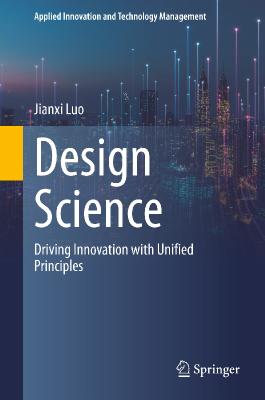
Design Science Driving Innovation with Unified Principles | 7.33 MB
Title: Design Science
Author: Nikhil Gupta, Jason Yip
Category: Business & Finance, Economics, Economic Development, Nonfiction, Computers, Advanced Computing, Artificial Intelligence, Management & Leadership, Management
Language: English | 149 Pages | ISBN: 9798868804434
Description:
This book presents a coherent, interdisciplinary account of how design works—and how to do it better. Framed by the Artifacts–Actions–Actors (3A) lens, it integrates classic and contemporary foundations (ontologies, theories, methods, and tools) in design science and bridges the gap between theory and practice with unified design principles applied across diverse, real-world scenarios. It also treats AI as both material and partner in design, showing how generative and agentic systems widen search and tighten iteration when grounded in verification and governance. Drawing on insights from engineering, architecture, management, psychology, and the social sciences, the book offers principles, methods, and representations that travel across domains—from products and software to services, systems, organizations, and ecosystems. It equips researchers, practitioners, leaders, and students with a teachable, auditable, and improvable toolkit for addressing complex design challenges and shaping innovation responsibly.
DOWNLOAD:
https://rapidgator.net/file/c5a153a727a561b3545557f208d900fb/Design_Science_Driving_Innovation_with_Unified_Principles.pdf
https://nitroflare.com/view/4511C666B3C2789/Design_Science_Driving_Innovation_with_Unified_Principles.pdf
This book presents a coherent, interdisciplinary account of how design works—and how to do it better. Framed by the Artifacts–Actions–Actors (3A) lens, it integrates classic and contemporary foundations (ontologies, theories, methods, and tools) in design science and bridges the gap between theory and practice with unified design principles applied across diverse, real-world scenarios. It also treats AI as both material and partner in design, showing how generative and agentic systems widen search and tighten iteration when grounded in verification and governance. Drawing on insights from engineering, architecture, management, psychology, and the social sciences, the book offers principles, methods, and representations that travel across domains—from products and software to services, systems, organizations, and ecosystems. It equips researchers, practitioners, leaders, and students with a teachable, auditable, and improvable toolkit for addressing complex design challenges and shaping innovation responsibly.
DOWNLOAD:
https://rapidgator.net/file/c5a153a727a561b3545557f208d900fb/Design_Science_Driving_Innovation_with_Unified_Principles.pdf
https://nitroflare.com/view/4511C666B3C2789/Design_Science_Driving_Innovation_with_Unified_Principles.pdf

Information
Users of Guests are not allowed to comment this publication.