A Theory of Dynamic Preferences
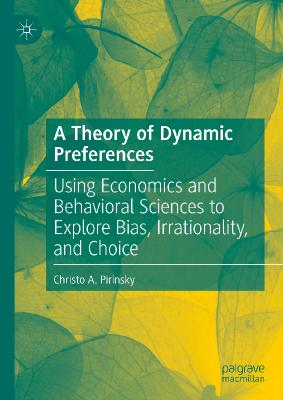
A Theory of Dynamic Preferences | 11.37 MB
Title: A Theory of Dynamic Preferences
Author: Christo A. Pirinsky
Category: Business & Finance, Economics, Theory of Economics, Nonfiction, Health & Well Being, Psychology, Applied Psychology, Finance & Investing, Finance
Language: English | 226 Pages | ISBN: 0470018690
Description:
This book presents a theory of choice grounded in two distinct processes. The first is a long-term evolutionary process that links survival-enhancing behaviors with positive emotional responses, forming "primary preferences." These preferences are inherited and reflect conditions under which early humans thrived. The second process is short-term and adaptive, allowing individuals to adjust their preferences in response to changes in their environment. These adjustments form revised preferences, which can override inherited tendencies when they no longer serve a beneficial purpose.
The chapters trace the origins of human preferences, explore how decisions evolve, and introduce a propensity for exploration (PEX) as a mechanism driving curiosity and growth. The book also examines the role of biased perceptions in sustaining exploratory behavior when inherited incentives are insufficient. By connecting psychology, economics, adaptation, and decision science, the text provides a clear framework for understanding how preferences form, why they shift, and how they can be realigned. This practical approach equips readers with tools to improve personal choices, enhance well-being, and achieve long-term growth.
DOWNLOAD:
https://rapidgator.net/file/00761b6f8a13a4a258c91ba207d12ba6/A_Theory_of_Dynamic_Preferences.pdf
https://nitroflare.com/view/8821E04E2224C0B/A_Theory_of_Dynamic_Preferences.pdf
This book presents a theory of choice grounded in two distinct processes. The first is a long-term evolutionary process that links survival-enhancing behaviors with positive emotional responses, forming "primary preferences." These preferences are inherited and reflect conditions under which early humans thrived. The second process is short-term and adaptive, allowing individuals to adjust their preferences in response to changes in their environment. These adjustments form revised preferences, which can override inherited tendencies when they no longer serve a beneficial purpose.
The chapters trace the origins of human preferences, explore how decisions evolve, and introduce a propensity for exploration (PEX) as a mechanism driving curiosity and growth. The book also examines the role of biased perceptions in sustaining exploratory behavior when inherited incentives are insufficient. By connecting psychology, economics, adaptation, and decision science, the text provides a clear framework for understanding how preferences form, why they shift, and how they can be realigned. This practical approach equips readers with tools to improve personal choices, enhance well-being, and achieve long-term growth.
DOWNLOAD:
https://rapidgator.net/file/00761b6f8a13a4a258c91ba207d12ba6/A_Theory_of_Dynamic_Preferences.pdf
https://nitroflare.com/view/8821E04E2224C0B/A_Theory_of_Dynamic_Preferences.pdf

Information
Users of Guests are not allowed to comment this publication.